

Teaching basic commands for dogs creates a shared language between owner and companion, improving safety near hazards, building trust, and establishing calm cooperation on every walk or visit.
Commands like sit, stay, and come are not about obedience for its own sake. They are the foundation of a reliable, communicative relationship.
Picture this: an owner stands in the backyard calling their dog’s name for the tenth time, clapping and whistling while the dog glances over, wags its tail, and trots off after a squirrel anyway.
It’s one of the most common frustrations dog owners face, and it usually isn’t stubbornness but rather a communication gap.
Basic commands for dogs create a shared language between owner and companion, turning chaotic moments into predictable, safe outcomes.
A dog who reliably knows “sit, stay, and come” can be kept out of danger near a busy driveway, an open front door, or an unfamiliar animal.
Teaching the essential dog commands builds trust and gives every walk or visit a foundation of calm cooperation.
Key Takeaways
- Teaching basic commands isn’t about power trips or blind obedience. Instead, it’s about creating a communication safety net that builds trust.
- Puppies can begin learning as early as eight weeks old. Keep sessions capped at five to 10 minutes to prevent their short attention spans from short-circuiting.
- “Sit,” “stay,” and “come” are your foundational, non-negotiable commands because they teach impulse control and keep your dog out of dangerous situations.
- Positive reinforcement (like luring and capturing) is proven to be the most effective method. Just ensure the whole household uses the exact same verbal cues and hand signals.
- A crate isn’t a penalty box; it’s a secure sanctuary that accelerates housebreaking and helps soothe separation anxiety.
- If your pup is ignoring you, they aren’t being spiteful. You likely need to lower the distractions, step back a training level, or upgrade to higher-value treats.
What Age Should You Start Training a Dog and How Long Does It Take?
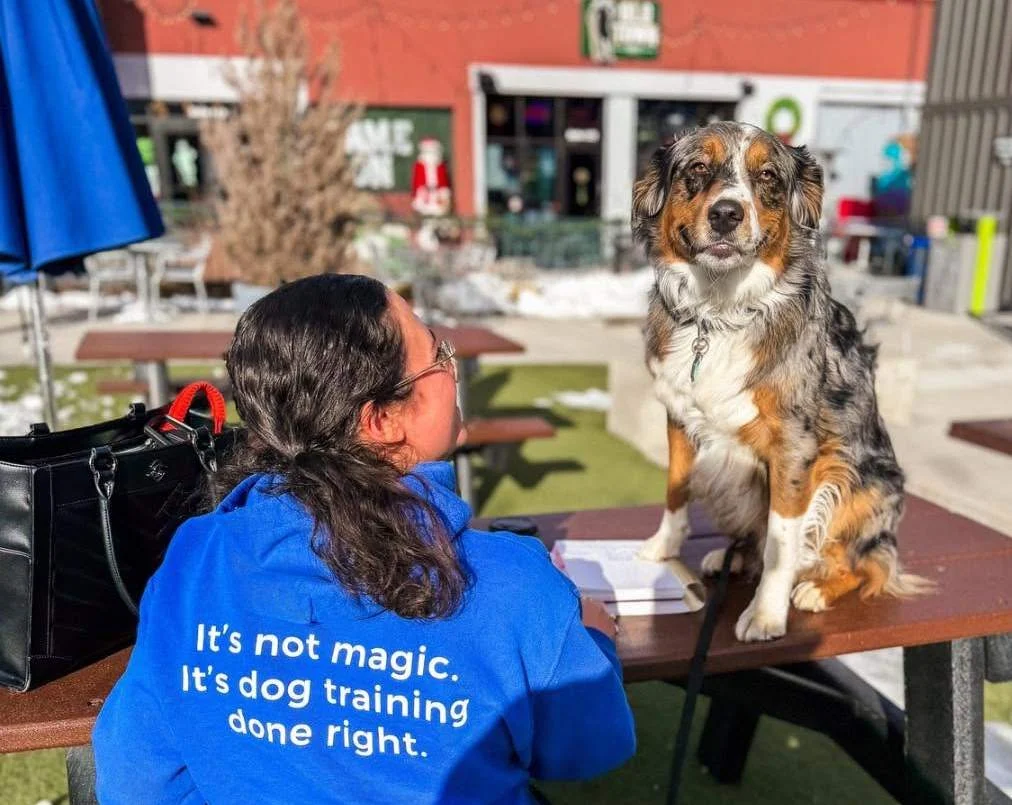
Knowing what age you should start training a dog matters as much as knowing which commands to teach. Puppies can begin very simple training as soon as they come home, typically around eight weeks old.
When building a training schedule for new puppies, sessions should stay short at around five to 10 minutes, two or three times a day so the puppy stays engaged rather than bored or overwhelmed.
So how long does it take to train a dog to master these behaviors reliably? Most puppies can learn foundational commands such as “sit,” “stay,” and “come” within a few weeks of consistent practice, though full reliability around distractions can take longer.
More complex habits, like housetraining, may take a few months.
For a clear roadmap of what to introduce and when, a week-by-week puppy training schedule helps pace training your puppy appropriately at every stage of development.
Which Commands Should You Teach Your Dog First: A Dog Training Commands List
When deciding which commands you should teach your dog first, safety and control are primary factors to consider.
A foundational dog training commands list starts with three core behaviors, which are sit, stay, and come. These are the true must-know commands for dog owners, since they build impulse control and prevent a pet from running into dangerous situations.
Beyond these three, other worthwhile things to train your dog early include “down” for calmness, “heel” for polite walking, and “leave it” to keep them away from hazards.
Consistent dog training words from the very start set a pup up for lasting success.
Recommended order for teaching dog commands:
- Sit: The easiest starting point; builds impulse control and attention.
- Stay: Extends impulse control and teaches the dog to hold a position.
- Come: Critical for safety; prevents the dog from running into dangerous situations.
- Down: Encourages calmness and a relaxed default behavior.
- Heel: Teaches polite, attentive walking without pulling.
- Leave it: Keeps the dog away from hazards and dangerous items.
How to Use Positive Reinforcement Dog Training to Teach Basic Commands
Positive reinforcement dog training is the most effective way to build a cooperative, trusting relationship with a pup.
Research has found that training with positive reinforcement is more effective at addressing target behaviors as well as general obedience training compared to aversive methods.
So, how do you teach a dog basic commands using this reward-based method?
Trainers typically rely on two techniques: capturing, where the owner waits for the dog to perform a behavior naturally and immediately marks it with a reward, and luring, where a high-value treat guides the dog’s body into position.
Many owners find that clicker training makes marking the exact right moment even more precise and easy to repeat.
Consistency matters just as much as technique. Owners can choose unique command words for dogs, such as “free” or “OK” as release cues, as long as every family member uses the same terminology every time.
Pairing verbal cues with distinct hand signals for dog commands, like an open palm for “stay” or a raised flat palm for “sit,” helps a dog learn faster by tapping into their natural ability to read human body language.
Sit, Stay, and Come: The Must-Know Commands for Dog Owners
Mastering sit, stay, and come is central to household harmony and outdoor safety.
As the foundation of all basic commands for dogs, “sit” is often the easiest to teach: lure the pup with a treat held close to their nose, move it slowly upward and back, and their bottom naturally lowers into position.
Once mastered, “stay” becomes the next step, teaching crucial impulse control. Signal with an open palm, take a step back, and immediately return to reward, gradually building distance and duration before releasing with a word like “free” or “OK.”
Teaching a dog to come when called is arguably the most vital of all essential dog commands to teach.
Start in a quiet indoor space by saying the dog’s name or “come” in an enthusiastic tone, rewarding immediately. Turn it into a game by tossing a treat, stepping away, and calling them to chase.
These three behaviors are the ultimate must-know commands for dog owners, keeping a companion safe and responsive anywhere.
If progress stalls or tailored guidance is needed, private dog training lessons can help troubleshoot recall and other core commands one-on-one.
Down, Leave It, and Heel: Other Important Dog Commands to Know
Expanding a dog training commands list means teaching behaviors that promote safety and self-control.
The “down” command encourages calmness: guide a treat from the dog’s nose straight to the floor, rewarding once they settle into a lying position.
Equally vital among the things to train your dog is “leave it,” which prevents grabbing dangerous items.
Hold a treat in a closed fist, say the cue, and wait for the dog to lose interest before rewarding with a different treat from the other hand.
The “heel” command is one of the most important dog commands to know for polite walking, teaching a dog to stay attentively by the owner’s side without pulling.
Keep the dog close, hold a treat at knee level, and reward as they walk in tandem.
Practicing these behaviors regularly reinforces the basic dog commands every owner should teach and keeps daily outings safe and manageable, especially in busy neighborhoods or around other dogs.
Crate Training Basics and Beyond: Expanding Your Dog’s Skills
Beyond leash work, crate training basics offer a dog a secure, personal space.
Crate training is crucial for puppies as it provides a safe space, aids in potty training, and can even help ease separation anxiety.
A single cue like “kennel” or “bed” should guide the dog into their area, always paired with positive rewards rather than punishment. Once these functional behaviors are set, owners often wonder how many commands a dog can learn overall.
Most dogs easily master around 10 fundamental commands, and many are capable of learning dozens of specialized cues over time. Expanding routines with fun puppy tricks, such as “shake,” “spin,” or “sit pretty”, keeps a dog mentally stimulated and eager to work.
For owners who want structured, hands-on support while training your puppy, programs like The Dog Wizard’s obedience training programs, including Board & Train options, help dogs build a versatile, lasting vocabulary well beyond the basics.
Success Story: Mr. Murphy’s Private Foundation Training

Background: Mr. Murphy was ready to learn how to be a polite puppy, but his family wanted to avoid a cookie-cutter approach to training. They needed a program focused on goals specific to their unique, everyday life.
The Approach: Enrolling in the Private Foundation program allowed for highly personalized education and instruction. Rather than standard class drills, the trainers got to know Murphy personally, customizing his lessons to build foundational manners and respect tailored directly to his family’s lifestyle.
The Result: Mr. Murphy proudly graduated from his program! He transformed into a polite, respectful pup equipped with the exact skills and manners needed to thrive in his specific home environment.
Why Does My Dog Ignore Commands: Troubleshooting Common Training Challenges
When owners ask why my dog ignores commands, the issue is rarely the cue itself. A breakdown in positive reinforcement dog training often stems from too many distractions, moving too quickly, or low-value rewards.
Evaluate pace, avoid repeating cues, and keep sessions brief to prevent frustration.
Use consistent, unique command words for dogs rather than redundant terms, and practice basic commands for dogs in low-distraction environments before adding real-world challenges.
If inconsistent responses continue despite these adjustments, it may be worth reviewing the signs your dog needs obedience training to determine whether professional support could help.
Here are a few frequently asked questions (FAQs) with answers tailored to your blog article, formatted for easy reading:
Frequently Asked Questions
What age should I start training my puppy, and is my older dog too old to learn?
You can start simple training as soon as your puppy comes home, typically around 8 weeks old. Keep sessions short to about five to 10 minutes at a time. As for older dogs, the old saying is wrong: adult and senior dogs can absolutely learn basic commands! While it might take a bit more patience to undo old habits, positive reinforcement works beautifully at any age.
Why does my dog obey me perfectly at home but ignore me on walks?
This is usually due to a lack of “generalization.” Dogs are highly situational learners, which means that a command learned in a quiet living room doesn’t automatically translate to a busy park full of squirrels and new scents. To fix this, gradually introduce distractions. Master the command at home first, then try the backyard, then a quiet sidewalk, and finally a busier park.
What is the difference between “capturing” and “luring” in positive reinforcement?
These are two different ways to get your dog to perform a behavior without forcing them:
- Luring uses a high-value treat like a magnet in front of your dog’s nose to guide their body into a position (like moving a treat up and back so their bottom naturally drops into a “sit”).
- Capturing means waiting for your dog to do the behavior naturally on their own (like lying down to rest) and immediately marking it with a click or praise and a treat.
How long will it take for my dog to fully master basic commands?
Most puppies and dogs can learn the basic mechanics of foundational commands like “sit,” “stay,” and “come” within a few weeks of consistent, daily practice. However, achieving 100% reliability around heavy real-world distractions or mastering complex habits like housetraining can take several months.
Why shouldn’t I just repeat the command if my dog doesn’t listen the first time?
If you say “Sit, sit, sit, sit,” your dog learns that the command is actually “sit-sit-sit” or, worse, that the first three times you say it don’t actually matter. Say the command exactly once. If they ignore you, calmly step back, reset their attention, and make the task easier or use a higher-value reward.