

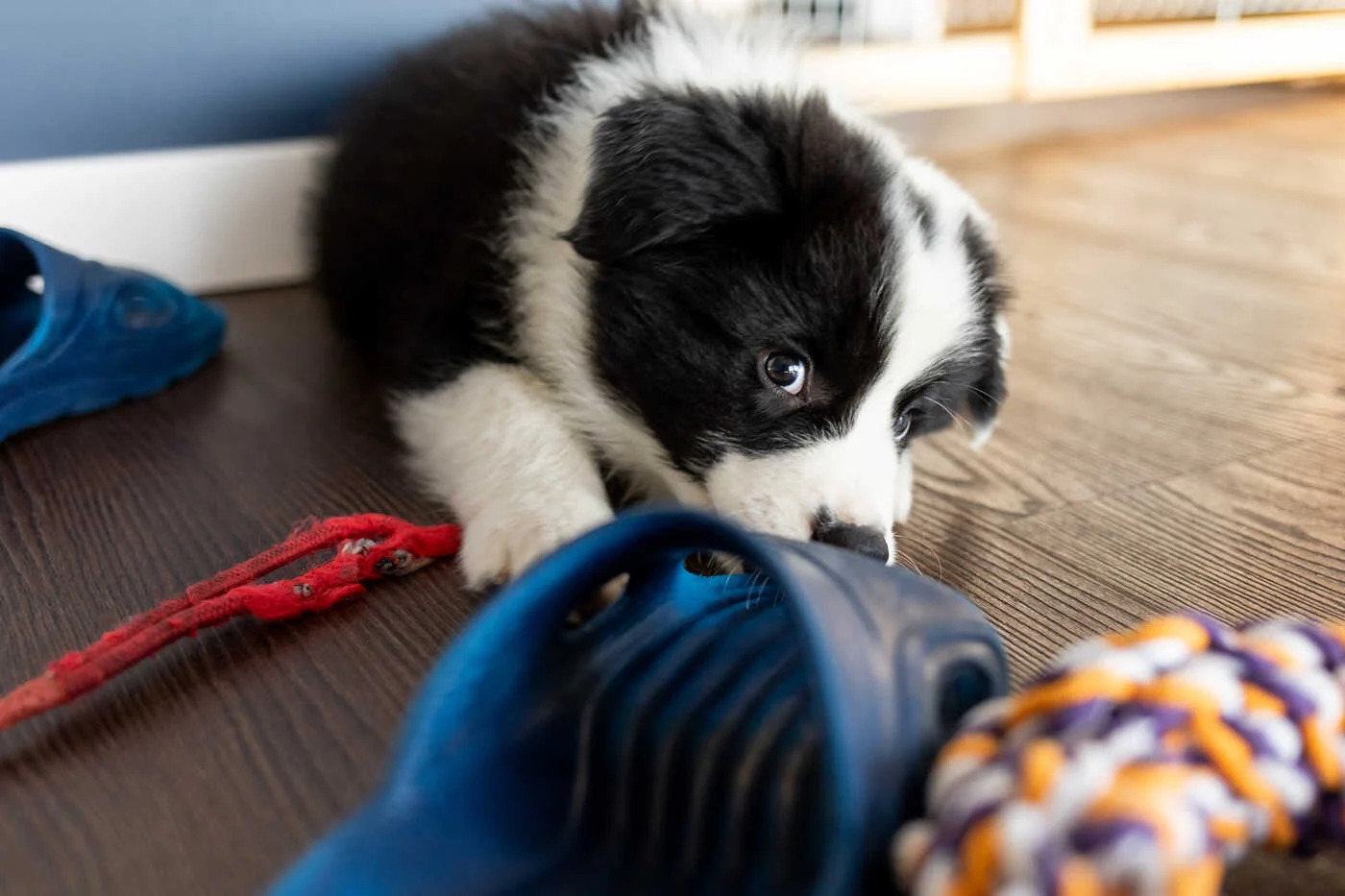
So, you finally brought that fluffy bundle of joy home. You probably spent weeks picking out the perfect name. You bought the softest bed and stocked up on premium treats. But now it is 3:00 AM. You are standing in the backyard in your pajamas. You are shivering.
Your puppy ignores you to chew on a blade of grass. Ten minutes later, you go back inside. The puppy immediately pees on your favorite rug. By day four, your hands are covered in tiny needle-like tooth marks.
You are starting to wonder if you made a huge mistake. And you know what? That is a very normal way to feel.
Most new owners go through a phase called the puppy blues. The reality of raising a dog is much noisier and messier than the pictures on social media suggest. The transition is tough because puppies do not come with an instruction manual.
They arrive with zero understanding of human rules. They think your expensive sneakers are chew toys. They think your hallway is a bathroom. To bridge this gap, you need a solid plan. You need something that goes beyond just teaching them to shake paws for a video.
The secret to a peaceful home is starting your education process immediately. Training is about building a language that both you and your dog understand. It creates a bond of trust. And it prevents minor annoyances from turning into lifelong behavioral problems.
This guide will walk you through the basics of puppy management. It will show you how professional help can save your soul when things get overwhelming.
The Real Reason Early Lessons Matter
Your puppy is learning every second they are awake. They watch how you react when they bark at the mail carrier. They notice if you give them a slice of cheese when they beg at the table. If you do not actively teach them what to do, they will make up their own rules.
And their rules usually involve chewing on baseboards.
Early training provides the boundaries that young dogs actually crave. Many people think letting a puppy be a puppy means letting them do whatever they want.
But a dog with no rules often becomes an anxious dog. They do not know how to please you. That creates a lot of stress for everyone.
If you skip these early steps, you might face bigger hurdles later. Issues like lunging at other dogs or extreme separation anxiety usually start in these first few months. Selective hearing is another big one.
The experts at the American Kennel Club point out that the first four months of a dog’s life are the most critical for their development. Using positive, consistent methods during this window helps your puppy grow into a calm and balanced adult.
You are not just teaching commands. You are teaching them how to exist in a human world. And that is a big job.
When Should You Pick Up the Treats?
You should start the very first day you bring your new friend home. Most puppies leave their mothers at 8 weeks old. At this age, their brains are like sponges. You do not need to spend an hour a day on drills.
In fact, that would backfire. Their attention spans are short. But they are always watching.
Focus on tiny wins. Reward them for sitting before you put their food bowl down. Praise them for choosing their rubber bone instead of the coffee table leg.
These small moments are the building blocks of a well-behaved pet. Keep your formal sessions to about five minutes. Do them several times a day in different rooms of the house. This helps the puppy realize that the rules apply everywhere.
It is not just a game you play in the kitchen.
The Essentials of Puppy Education
1. Mastering the basics
Start with the safety commands. Teaching a puppy to roll over is cute. But commands like sit, stay, and come can actually save your dog’s life.
A solid recall is the most important skill your dog will ever have. It allows you to stop them before they run into a street.
It helps you manage them if they approach a person who might be afraid of dogs. These basics create a foundation of safety. And they make life much easier for you.
2. The power of rewards
Dogs do what works for them. If sitting gets them a piece of chicken, they will sit more often. This is the heart of positive reinforcement. You want to mark the exact second they do something right.
Use a word like “yes” or a clicker. Follow that word immediately with a reward. This clear communication helps the puppy connect their action to the good thing that follows.
But before you get frustrated with their chewing habits, remember that puppies explore the world with their mouths. They are not trying to be destructive. They are likely teething. Or they are simply curious about how your shoe tastes.
3. Keep it brief
If you notice your puppy starting to sniff the floor or wander off during a lesson, you have gone on too long. End the session on a high note while they are still successful. Pushing a tired puppy leads to frustration for both of you.
If they get a command right, give them a big reward and stop there. You want them to look forward to the next time the treats come out. And always keep it fun.
4. The golden rule of consistency
Inconsistency is the fastest way to ruin your progress. If you allow the puppy on the couch but your partner yells at them for being there, the puppy becomes confused. They cannot understand the concept of “sometimes.”
Everyone in the house needs to use the same words and the same rules. If “down” means to lie on the floor for you, make sure it does not mean to get off the guests for someone else.
Sit down as a family. Decide on the vocabulary you will use. And stick to it.
5. Socialization is not just about play
Many people think dog socialization means letting their puppy play with every dog they see. But that is actually a recipe for an over-excited or reactive dog.
True socialization is about neutral exposure.
You want your puppy to see a bicycle. You want them to hear a vacuum cleaner. You want them to watch a person in a large hat without becoming afraid.
You want them to see these things and remain calm. Aim for quiet observations between the age of 8 weeks and 16 weeks.
6. Living by the clock
Puppies thrive on a predictable schedule. If they know exactly when they will eat, sleep, and go outside, their anxiety levels drop. A schedule is also your best tool for house training.
A general rule: a puppy can hold their bladder for one hour for every month of age, plus one. For the full method, read our guide on how to potty train a puppy.
A crate is one of the most effective tools for keeping your puppy on schedule — learn how to crate train a dog the right way.
This means a two-month-old puppy needs a bathroom break at least every three hours. If you stick to a timer, you will have fewer accidents to clean up. And you will be a lot happier.
7. Pack your patience
Growth is rarely a straight line. Your puppy might be a genius on Tuesday and act like they have never heard their own name on Wednesday. This is normal behavior for a developing brain.
Take a deep breath and keep going. The small habits you repeat every single day are what eventually create a great dog. It takes time for these lessons to stick. But they will stick eventually.
Navigating Common Roadblocks
It is perfectly normal for puppies to bite, jump, and have accidents. These are not signs of a bad dog. Biting is how they played with their siblings in the litter. Jumping is how they reach your face to say hello.
Your job is to redirect that energy. If they bite your hand, give them a toy. If they jump, turn your back and walk away. Only give them attention when all four paws are on the floor.
One of the biggest hurdles is the vacuum stage. This is when they try to eat every pebble, mulch chip, and stick on the sidewalk. This behavior is natural.
But it can be dangerous. Teaching a “leave it” command early on can prevent an expensive trip to the emergency vet. You have to be faster than they are. And you have to be vigilant.
When to Call in the Professionals
While many owners can teach a dog to sit, the nuances of behavior can be tricky. You might find that your puppy is particularly stubborn. Perhaps they are showing signs of fear that you do not know how to handle.
Sometimes, your own busy schedule makes it hard to be as consistent as the puppy needs. It is okay to admit that you need help. And there is no shame in it.
This is where structured help makes a massive difference. Professional programs provide a controlled environment. Your dog can learn from classical and operant conditioning there without the distractions of a busy household.
Trainers have the timing and the experience to read your dog in a way that beginners might miss. If you find yourself crying more than you are laughing, it might be time to look into The Dog Wizard for guidance.
Structured programs take the guesswork out of the process. They help bridge the communication gap. You won’t just be shouting words at a dog who does not understand them.
This professional touch often leads to much faster results. It creates a significantly lower stress level for the human half of the team. You get to enjoy your dog while someone else helps lay the heavy groundwork.
A Success Story: From Chaos to Calm
Think about a puppy named Cooper. His owners were exhausted. Cooper barked at every shadow. He shredded the curtains. He refused to walk on a leash. The owners felt like they had failed as pet parents.
But after starting a structured training plan with us, everything changed.
They moved away from random corrections. They started using a clear, scheduled routine. They learned how to reward the quiet moments Cooper had instead of only paying attention to him when he was naughty.
Within a month, Cooper was a different dog. He walked politely by their side. He would settle on his bed while the family ate dinner.
The owners did not just get a fixed dog. They gained the skills to communicate with him for the rest of his life. That bond is worth every bit of effort. And it all started with a little bit of help.
Final Thoughts
Bringing a puppy home is a big life event. It requires a lot of work. But the payoff is a loyal companion who will be by your side for a decade or more. Focus on the long game.
Do not let a puddle on the floor today ruin your excitement for the future.
With a bit of structure, a lot of treats, and the right support system, you can turn that chaotic ball of fur into the best dog you have ever owned.
If you feel like you are drowning in puppyhood, reach out to The Dog Wizard for our structured puppy programs to get your training back on track.
Your future self will thank you for the investment.
Frequently Asked Questions
How long will it take to see results?
You will see small changes in just a few days. But true reliability takes time. Most dogs need several months of daily practice before their training becomes a second nature habit.
Which command should I teach first?
The sit command is the classic starting point. It is physically easy for the dog to do. And it also serves as a great way for them to say please for everything they want in life.
Is a professional trainer really necessary?
Not always. But they are a huge asset. They help you avoid common mistakes. And they can solve problems in a few weeks that might take you months to figure out on your own.
What is the most important part of training?
Consistency is the most important factor. If the rules change every day, your puppy will never learn them. But if you stick to the plan, the results will follow.