

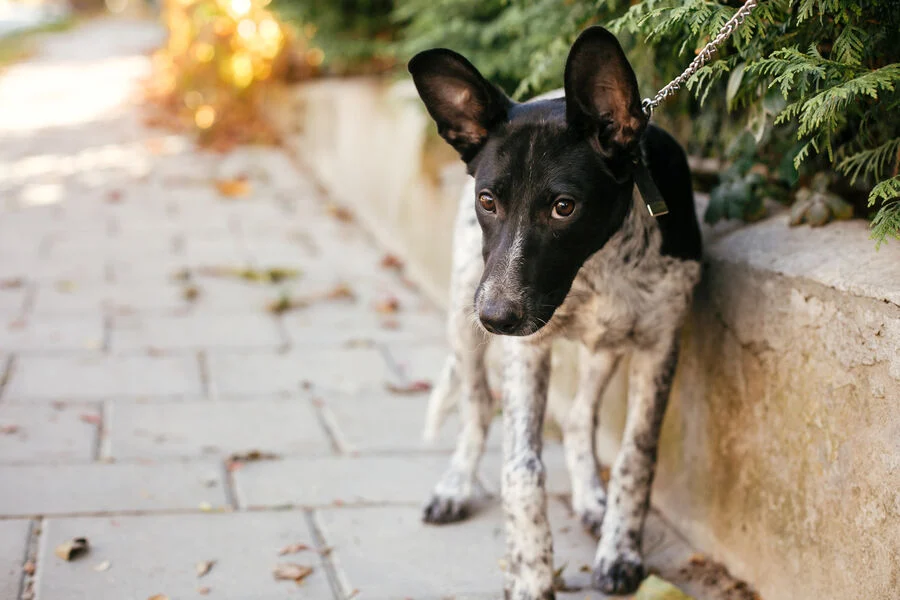
A dog that snaps is often scared, cornered, or overwhelmed, not naturally vicious. Most dog bites happen because a dog feels frightened, not because it is mean.
Learning to read the body language that comes before a fear-based bite, knowing how to safely approach or calm a nervous dog, and following the right first-aid and reporting steps after an attack protects both people and pets.
The Dog Wizard’s trainers work nationwide with fearful, reactive, and previously bitten dogs to rebuild confidence through structured, balanced, positive training.
Picture this: a delivery driver bends down to pet a wagging tail, and in an instant the family dog that has never bitten anyone snaps at the outstretched hand.
The owner is mortified and insists their dog isn’t aggressive, and honestly, they’re right.
In almost every case like this, the dog wasn’t attacking out of meanness. It was reacting out of fear.
This guide walks through how fear fuels dog bites, the warning signs owners often miss, and the exact steps to take if a bite ever happens.
Key Takeaways
- Fear, not aggression, drives most dog bites, since a scared dog bites mainly to create distance from whatever feels threatening.
- Warning signs such as stiff posture, lip licking, and a tucked tail usually show up well before a dog ever bites.
- Everyday triggers like loud noises, strangers, past trauma, and pain can push a nervous dog toward biting.
- An owner’s own tension and nervous energy can transfer to the dog and raise the odds of a defensive reaction.
- Quick first aid, a medical check, and professional training all lower the chance of a bite happening again.
Understanding the Connection Between Fear and Dog Bites
Fear, more than any inborn aggression, is the force behind most dog bites. More than 4.5 million people are bitten by dogs each year in the United States, and children account for at least half of those injuries.
When a dog feels cornered, startled, or unable to escape a perceived threat, biting becomes a last-resort survival tool rather than a show of dominance.
Veterinary behaviorists often describe this as a distance-increasing behavior as the dog isn’t trying to hurt anyone, it’s trying to make the frightening thing go away.
That connection between fear and dog bites is why calm family pets, including dogs with no history of aggression, can still bite once they’re pushed past their comfort threshold.
Owners frequently ask why dogs attack their owners, and the answer is rarely resentment.
A dog that suddenly snaps at its owner is usually reacting to sudden pain, an unexpected touch, or a startling moment rather than any grudge.
This distinction matters because punishing a fearful dog for biting tends to deepen the underlying fear instead of fixing it.
Programs like The Dog Wizard’s Aggression Rehab Training work specifically with dogs whose bite history traces back to fear, stress, or gaps in early socialization, rather than treating every dog that has bitten as simply dangerous.
Signs of Fear Aggression vs Playful or Aggressive Biting
Telling the difference between a fear bite and an aggressive bite comes down to reading a dog’s whole body, not just its mouth.
A dog getting ready to bite out of fear typically freezes or tries to shrink and retreat before it ever snaps, while an aggressive dog tends to move forward and hold its ground.
Those signs of fear aggression in dogs are usually visible well before teeth make contact.
- Stiff, frozen posture: a fearful dog often goes rigid rather than relaxed, bracing for a threat it can’t escape.
- Whale eye: when the whites of a dog’s eyes become visible, it usually signals discomfort or guarding.
- Tucked tail and pinned ears: these are efforts to look smaller and less noticeable to a perceived threat.
- Lip licking and yawning: subtle stress signals that often appear when a dog is uneasy but not yet growling.
- Low growl before contact: a warning, not misbehavior, meant to ask for space before things escalate.
Playful mouthing looks and feels very different.
If you’ve ever wondered why my dog bites me playfully, look for a loose, wiggly body, a soft open mouth, and a head that often turns away from the playmate between nips.
Puppies especially use their mouths to explore and to test boundaries, which is a normal, if frustrating, part of growing up.
True aggression, by contrast, shows a stiff body and a direct, forceful bite instead of a quick, controlled nip.
Owners raising a mouthy puppy can find more detail in The Dog Wizard’s guide on why puppies bite, which breaks down teething, frustration, and fear as separate causes.
“It’s so important to learn to read your dog’s body language and recognize their stress signals. When you understand what your dog is communicating, you can advocate for them—whether that means telling a child, friend, or family member that your dog needs space or simply doesn’t want to be petted—and help keep everyone safe.” — Amanda Davis, The Dog Wizard
Real Case Study: Jack’s Fear Aggression Transformation

Background: Jack came to The Dog Wizard with intense fear reactions toward strangers, children, and other animals, alongside separation anxiety. He enrolled in a 3-week board and train program to work on his fears, basic obedience, and crate training.
The Approach: Jack’s program combined muzzle conditioning for safe public exposure, structured obedience, crate training, and gradual desensitization to his specific fear triggers — starting with controlled outings like a visit to Lowe’s where he could practice calm behavior around strangers in a real-world environment.
The Result: Jack graduated with a reliable place command and a new kind of confidence. His owner later sent in an update photo of Jack holding his place calmly while an unfamiliar worker was in the next room — exactly the scenario that would have triggered a fear reaction at intake.
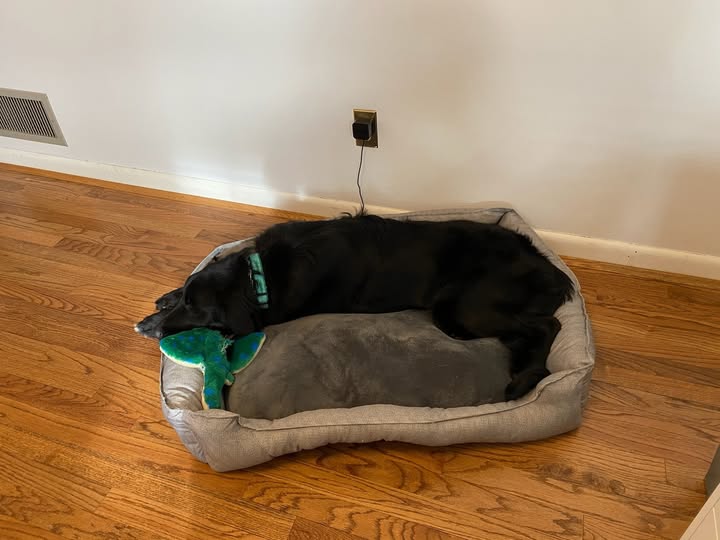
Your dog is trying to tell you something
Fear-Based Aggression Has a Path Forward
The Dog Wizard works with fearful and reactive dogs nationwide to rebuild confidence through structured, balanced training.
Common Triggers That Fuel Fearful Dog Behavior
Certain everyday situations push nervous dogs toward biting far more often than others.
Unfamiliar people, sudden loud noises like fireworks or thunder, and being cornered or crowded are among the most common triggers of fearful dog behavior, since they leave a dog feeling unable to retreat.
Dogs with a history of neglect, abuse, or limited early exposure to new environments, including many rescue dogs, tend to react more strongly to these same situations because their baseline stress level starts out higher.
Pain and illness are also frequent culprits behind sudden, seemingly unprovoked reactions, since a dog that is hurting may snap when touched in a sore spot.
Resource guarding around food, toys, or a favorite person is another trigger worth watching for.
The impact of anxiety on dog behavior around strangers can be especially clear when these triggers stack up without any chance for the dog to decompress, turning even minor stress into a real dog bite injury.
Dogs coming from difficult backgrounds often benefit from The Dog Wizard’s Rescue Rehab Training, which addresses fear and reactivity tied to past trauma.
How Human Fear and Anxiety Raise the Risk of a Bite
A nervous owner or bystander can make a scared dog even more likely to bite, since dogs are remarkably good at picking up on human emotional states.
If a person tenses up, grips the leash tightly, or holds their breath around a dog, the dog often reads that tension as confirmation that something dangerous is nearby.
This is part of how fear causes dogs to bite during stressful moments such as vet visits or nail trims, when the owner’s own anxiety adds to the dog’s existing discomfort.
Trainers who work with reactive dogs often notice that when handlers relax, muzzle-train calmly, or simply breathe more evenly, the dog settles faster, too.
Staying composed, using a steady voice, and avoiding sudden grabs all help interrupt this feedback loop between human stress and canine fear, which is one reason people ask why dogs attack their owners in high-pressure situations.
For step-by-step guidance on managing day-to-day tension around a reactive dog, our article on living with an aggressive dog covers practical household routines that keep both people and pets calmer.
Safe Ways to Approach and De-escalate a Nervous Dog
The safe ways to approach a nervous dog all start with slowing everything down before the dog feels forced to bite.
The following steps work whether you’re meeting an unfamiliar dog or trying to settle your own.
- Stand still and keep your hands at your sides instead of reaching out.
- Avoid direct eye contact, since a hard stare can feel like a challenge to a nervous dog.
- Speak in a calm, low voice and avoid sudden or jerky movements.
- Let the dog approach and sniff on its own terms rather than crowding it.
- If the dog shows stress signals, back away slowly and give it space to decompress.
Never run from a fearful dog, since fast movement can trigger a chase instinct even in dogs that don’t normally give chase.
De-escalating a scared dog safely means giving it time, space, and predictable behavior from the people nearby.
Building this kind of calm, patient exposure into everyday life is also one of the practical steps to prevent fear induced dog bites and the foundation of good socialization training, which helps dogs feel less overwhelmed by new people and places over time.
“A successful de-escalation moment can be as simple as recognizing the early signs of stress and choosing not to add more pressure. By remaining neutral, giving the dog space, and using something positive like tossing a high-value treat, we can reduce the pressure to interact and help prevent the situation from escalating.” — Amanda Davis, The Dog Wizard
What to Do if a Dog Attacks You or Bites Someone
The moments right after a bite call for quick, level-headed action to protect everyone involved.
If you’re wondering what to do if a dog attacks you, following a clear dog bite protocol reduces both physical harm and the chance of a second incident.
- Separate the dogs or people safely using a barrier, a hose, or a loud noise, never your bare hands.
- Secure the dog on a leash or in a quiet room away from the situation.
- Check the bite for bleeding, puncture wounds, or swelling, since small punctures can hide deeper damage.
- Exchange contact and vaccination information if another owner is involved.
- Report the bite to local animal control or your health department, since this is often required by law and helps confirm rabies status.
Avoid scolding or punishing the dog in the moments after a bite, since a stressed dog needs to be calmed down, not confronted further.
Once everyone is safe, a veterinary exam can help rule out pain or illness as an underlying cause, and a qualified trainer can start addressing the behavior itself.
Knowing what to do if my dog bites someone before it happens makes it far easier to answer what should you do immediately after a fear-based dog bite calmly rather than in a panic.
Dog Bite Treatment and First Aid Symptoms to Watch Out For
A dog bite can range from light bruising and torn skin to deep puncture wounds, and dog bite treatment should match the severity.
For minor wounds, if you’re deciding what to put on a dog bite, wash the area thoroughly with soap and warm water, apply gentle pressure to stop any bleeding, and cover it with a clean bandage.
Deeper wounds, heavy bleeding, or bites to the face or hands need prompt medical attention, since even bites that look minor can carry a real infection risk.
According to the Centers for Disease Control and Prevention, roughly one in five people bitten by a dog needs medical care for the injury, and a small number of bites each year turn fatal.
If you’re unsure what a dog bite looks like as it heals, watch the wound over the following days for redness, swelling, warmth, or discharge.
These dog bite symptoms can signal infection and warrant a follow-up visit. A doctor may also recommend a tetanus booster or a rabies evaluation if the biting dog’s vaccination status is unknown.
Long-Term Prevention: Teaching Dogs Not to Bite From Fear
Reducing fear-driven biting over time comes down to consistent, patient training rather than one-time fixes.
If you’re learning how to teach your dog not to bite, positive reinforcement training, which rewards calm behavior instead of punishing fearful reactions, helps a dog build confidence and trust instead of dread.
Gradual, controlled exposure to whatever triggers a dog’s fear, paired with treats and praise, teaches the dog that the trigger predicts something good rather than something dangerous.
Early and ongoing Socialization Training remains one of the most effective long-term tools for preventing fear-based aggression, since well-socialized dogs simply encounter fewer surprises.
For dogs with an established bite history or intense reactivity, working with a certified trainer or veterinary behaviorist adds structure and accountability that’s hard to replicate alone.
The Dog Wizard offers board and train, day training, and group training options built around exactly this kind of steady behavior change and the practical steps to prevent fear induced dog bites.
“Consistency with positive reinforcement helps build trust and strengthens the relationship between you and your dog. By rewarding the behaviors you want to see, you create clearer communication and help your dog understand what is expected of them.” — Amanda Davis, The Dog Wizard
Fear-based biting is a solvable problem, not a life sentence for a dog or a reason to give up on it.
With careful attention to body language, calmer handling from the people around the dog, and consistent, professional training, most fearful dogs can learn to feel safe in situations that once overwhelmed them.
If your dog has shown signs of fear-based aggression or has already bitten someone, reaching out for a professional evaluation is the safest next step toward rebuilding that trust.
FAQ
Why do scared dogs bite more often than confident dogs?
A scared dog has fewer coping options available, so when it can’t retreat or avoid a perceived threat, biting becomes its fastest way to create distance and feel safe again.
Can a dog that has never bitten anyone still attack out of fear?
Yes. Even a calm, well-behaved dog can bite if it is startled, cornered, in pain, or pushed past its stress threshold in an unfamiliar situation.
Should I punish my dog for growling before a bite?
No. Growling is a warning, and punishing it can teach a dog to skip that warning next time, making future bites harder to predict.
When should a dog bite be seen by a doctor?
Any bite that breaks the skin, involves heavy bleeding, or shows signs of infection like redness or swelling should be evaluated promptly by a medical professional.